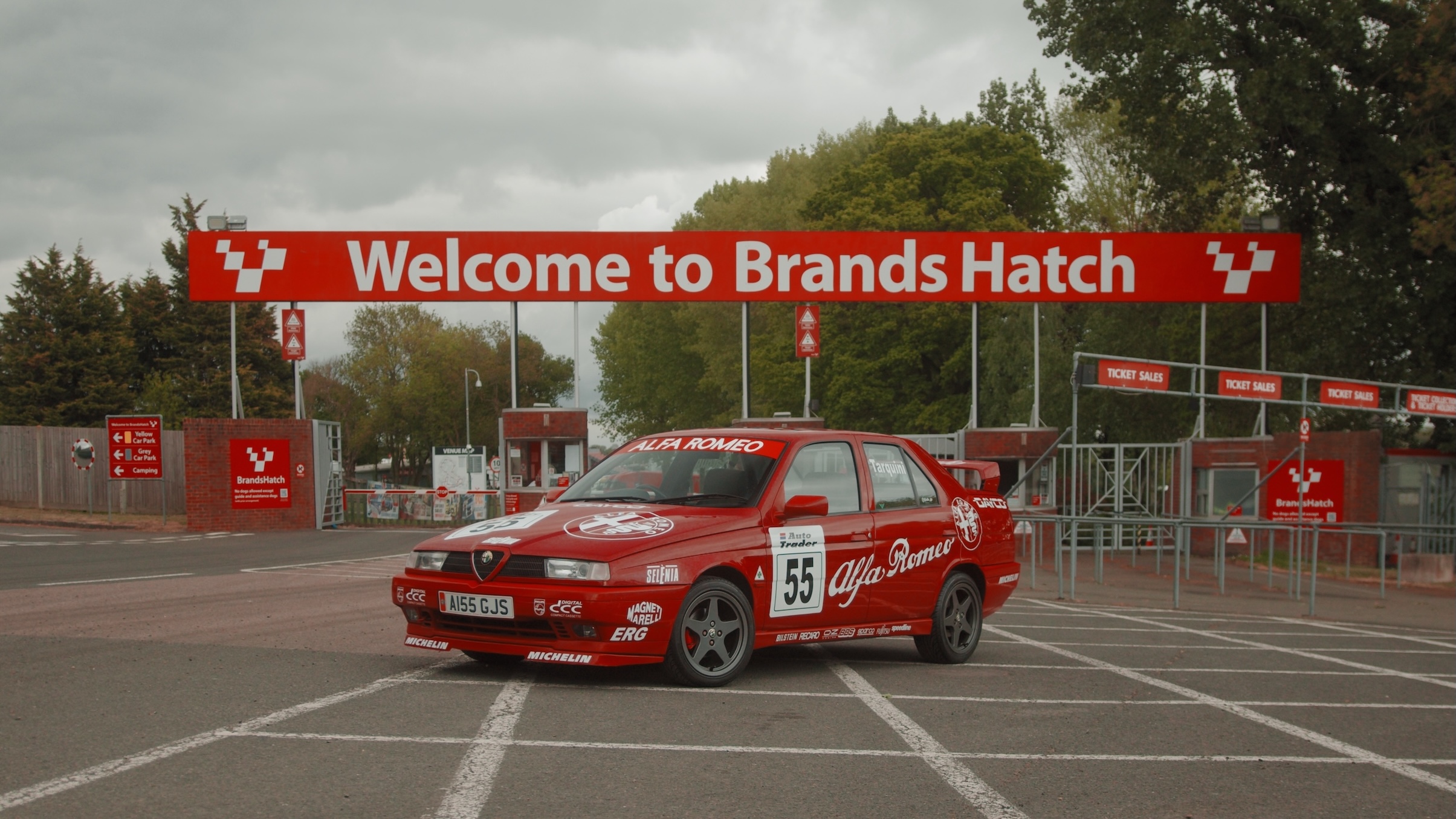
The Alfa Romeo 155 was only produced for six years between 1992 and 1998, but with nearly two hundred thousand hitting the streets in that time, there’s no denying its impact on ‘90s automotive culture.
From the very beginning this car divided opinions, often with the sort of passion you’d expect from any auto coming out of Italy. For some, the 155 was a performance superstar almost immediately, not least due to its prowess in the world of touring car racing.
For others, it was little more than a tarted-up Fiat Tipo sporting a (marginally) more exotic Quadrifoglio badge. But can anyone say the Alfa Romeo 155 was just another mundane Eurobox in a long line of forgettable saloons that came and went during the ‘90s? Or is it a true Italian icon that took on the establishment and won?
It’s true the Alfa 155 is a rare sight 30-odd years on, with most having found their way to the big scrapyard in the sky through infestation with the dreaded tin worm. But history has been kind to this little car. If anything, the rarity only boosts the legendary status. Right now, these boxy compact saloons are certainly seen as iconic and synonymous with the popularity of modern classics as collector’s cars. For some, they’re even the last word in retro chic, making the 155 the choice of the more discerning automotive connoisseur.
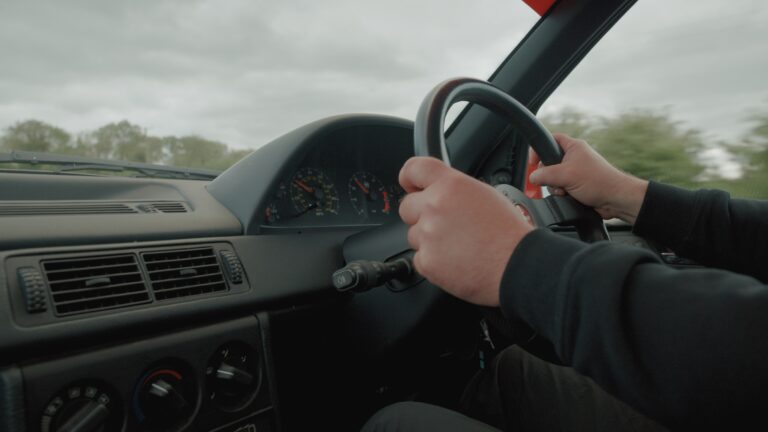
It is, after all, an Alfa Romeo – a badge that carries with it so much more than just performance credentials, or a styling statement, or even the most sensible motoring. At the risk of sounding like the generations born far later than the ‘90s – driving an Alfa is a vibe!
Of course, that’s not to say that, in many respects, the 155 was the ‘best’ car of the decade. But that’s not what Alfas are all about. So, rust and a reputation for true Italian reliability aside, we’re thankful the legendary 155 is remembered for all the right reasons.
For starters, there’s plenty of Italian flair when it comes to the chiselled jaw and straight-edge styling of what was intended as a relatively sedate rep-mobile for the up-and-coming junior executive. There’s also the heady selection of noteworthy petrol engines. Not to mention the fact they saw their way to leaving the diesel (and smaller capacity petrol) variants on the continent, away from the UK market.
But what’s perhaps most important is that the 155 was such an unlikely model to become one of the most dominant touring cars of the ‘90s. In perhaps the ultimate underdog story, it managed to adapt itself and become a true track titan. Even if the full-on, fire-spitting racecars shared very little with the road-going versions.

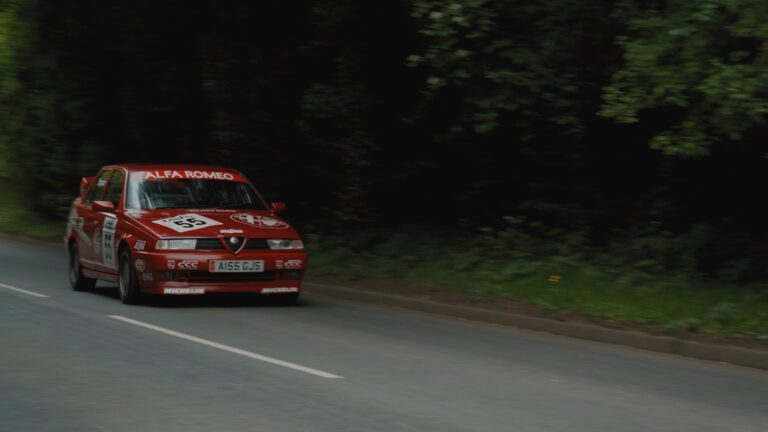
In the UK at least, stepping into your ‘90s Alfa 155 meant you were practically Gabriele Tarquini strapping into his V6 TI Competition car… even if yours happened to be the base model 1.8 Twin Spark. And even that was a badge of honour in itself – why have one spark plug per cylinder when you can have two? “I drive an Alfa 155 T-Spark” amounted to nothing short of instant kudos over the next bloke in his Audi A4. Did it really matter if yours was the 1.8 or the 2.0? Or the 8V or 16V version? We think not. The Twin Spark badge said it all.
Everyone’s favourite F1-derived four-cylinder wasn’t the only iconic piece of Italian engineering to find itself under the bonnet of the 155, either. A 2.5-litre version of Alfa’s already legendary V6 ‘Busso’ lump — an engine that’s universally (and rightly) regarded as one of the best-sounding of all time — was fitted into the range-topping 155 for a heady 166hp on tap. And that’s only the top dog because we’re not counting the 190hp 155 Q4.
Something of an automotive oddity, the Q4 was essentially a Lancia Delta Integrale with a 155 body. It shared the same turbocharged 2.0 16V Twin Cam engine, running gear and permanent four-wheel drive system. Practically speaking, the 155 Q4 was a thoroughbred rally car for the road.
But these exotic engine options don’t tell the whole story. If we go back to the start, there’s no denying that filling the shoes of the outgoing, and extremely popular, Alfa Romeo 75 looked all but impossible. Especially as Alfa Romeo were now owned by Fiat, who planned to ditch the revolutionary rear-drive transaxle layout for a more conventional front-wheel-drive setup. Perhaps worse still, the 75’s replacement was to be based on the Fiat Tipo platform. So, you’d think the 155 would have been doomed from the start.
Of course, the Alfa design flourishes meant the 155 looked far better in comparison (and this was three full years before the ‘widebody’ facelift versions came along in 1995). Like all Alfas, it was also seen as a little exotic here in the UK, an off-the-wall choice compared to, say, a BMW 3-series or Ford Mondeo. Unfortunately though, many still saw the switch to a front-wheel-drive setup as boring and the ultimate example of an exciting manufacturer selling out to convention. No matter what they chose to put under the bonnet. Alfa Romeo had other ideas, however, and to alleviate the situation, they took the 155 racing.
The dominance of the 155 in motorsport is the essence of its legacy. The road car may have been something of a parts-bin project, borrowing heavily from the spares at the Fiat factory, but where the 155 really came alive was on the track. In 1993, with no prior experience, Alfa entered the DTM (Deutsche Tourenwagen Meisterschaft), the most prestigious and brutal touring car championship in Europe. They built their 155 V6 Ti DTM specially for the home-grown German series, complete with a carbon body, active differentials, a huge aero pack, sequential gearbox, and a 420hp version of the Busso V6 that revved to 11,800 rpm and could propel the car to 60mph in under three seconds. It was also the only four-wheel-drive car on the grid and it took the championship on the first outing.
And then there was the British Touring Car Championship in 1994, one of the most closely followed motorsport spectacles on the globe. Alfa entered their specially homologated 155 Silverstone and it immediately caused uproar on the grid. While the other manufacturers had agreed to run near-stock silhouettes with no aerodynamic aids, the 155 turned up with a full aero pack, complete with a wild front splitter and even wilder rear-wing. The car was protested, re-inspected, allowed, then protested again. All the while, Alfa Romeo was busy winning races, and eventually the whole series. The first and only title for Alfa in the UK and the reason why extreme aerodynamic aids were found on every car the very next season.
It was much the same story at touring car championships in Italy, France, Portugal, Scandinavia, and the Spanish Superturismo series. The 155 was king.

What made the 155 so dominant was its adaptability around the regulations. Front-wheel drive was used when it suited the rulebook, and four-wheel drive when it was allowed with, of course, engines that were tuned to stay just within the regulations, or thereabouts. But that’s the whole point of the 155’s adaptability, is exactly what it’s all about, no matter whether it’s on the circuit or the road.
You could say the lasting legacy is this car can be seen as anything you want it to be. The Alfa Romeo 155 is a sensible, executive saloon with a Twin Spark. It’s a monster V6 Touring Car. It’s a turbocharged, four-wheel-drive rally-bred weapon. And it’s a performance family runabout with chiselled Italian styling and a choice of some of the finest engines to ever come out of the Anonima Lombarda Fabbrica Automobili factory.
It’s both a poor man’s Ferrari, and it’s the choice of the classic car collector in the know. It’s also a Fiat Tipo and a Lancia Delta to boot. Most of all though, the Alfa Romeo 155 is one of those motoring icons with racing roots that directly contributes to the popularity of the retro motorsport style on the streets. In fact, nowadays it almost feels like any road-going 155 without some sort of racing livery, or at least a nod to its impact on motorsport history, is something of a waste.