
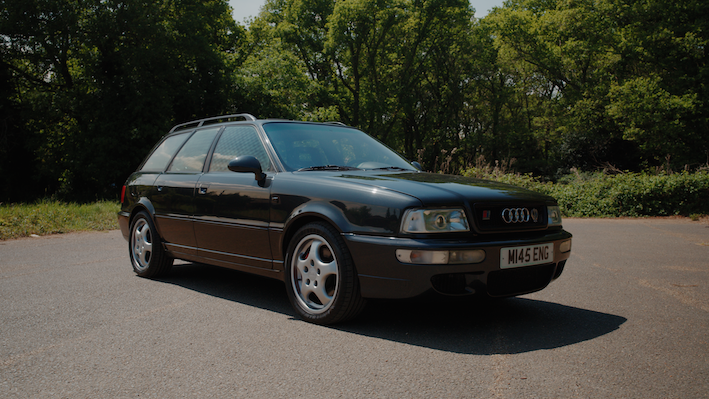
There’s no doubt there’s plenty to talk about when it comes to the legendary Audi RS2 Avant. But perhaps the salient, not to mention most important, headline grabbers are these: This was the first Audi to sport the iconic RS badge.
With a 168mph top speed, it was easily the fastest production estate of the 1990s. It could out-accelerate any other road car to 30mph (including, most famously, the McLaren F1), stopping the clock at just 1.5 seconds. Oh, and it was mostly put together by Porsche.
Now, maybe that’s all the pub ammo you’ll ever need, although we’d argue the full story of this masterful collab between two German automotive giants is even more intriguing. So, let’s delve deeper into a true icon of the 1990s, a motoring marvel that immediately achieved cult status despite being produced for just 15 months between March 1994 and July 1995. And a car that’s carved out a legacy that continues to this day with every fast ‘Avant’, estate, ‘Touring’ and station wagon on the market.
The RS2 wasn’t the first high-performance estate car. The BMW E34 M5 Touring had already been on the scene for a couple of years, and who can forget the BTCC icon that is the Volvo 850? In fact, Audi had already developed the Avant version of their 2.2-litre S2 Coupe, itself based on the Audi 80, and very much the spiritual successor of the classic (and even more iconic) Audi Quattro.
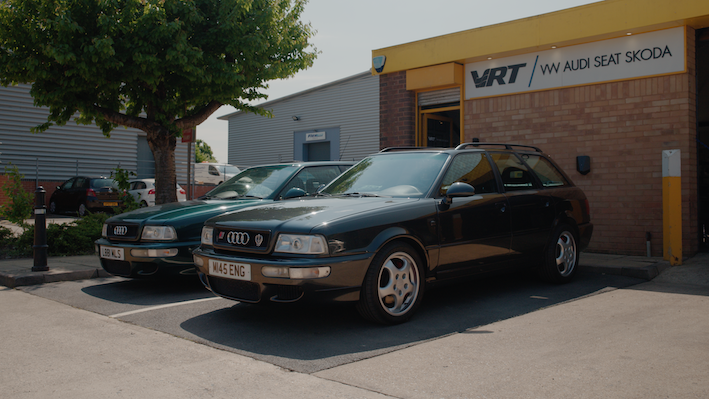
But for Audi, these weren’t perceived as problems, it was merely more to think about and to overcome when following their dream of building a true world-beater – the wagon to end all wagons. The solution, as it turns out, was modifying a whole load of S2 Avant shells and shipping them – along with their turbocharged, five-cylinder engines – off to Porsche at their Rossle-Bau plant in Zuffenhausen.
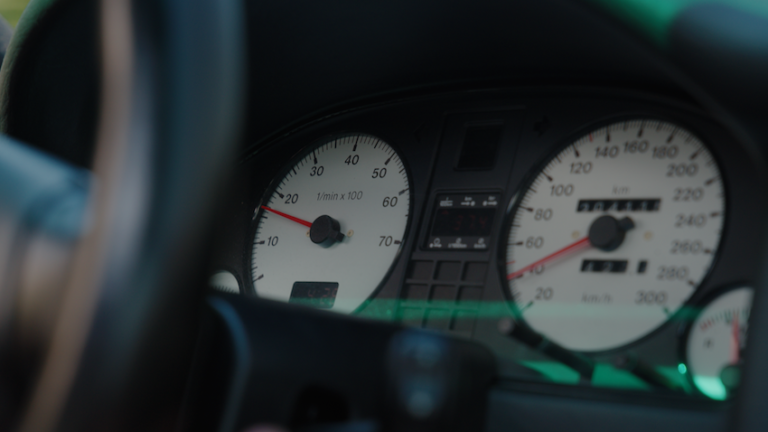
Perhaps the result was always going to justify the means. What the RS2 offered was genius in its simplicity – nothing, but mind-blowing performance. As fast as a Ferrari 456, it simply blew every other estate car out of the water. It was also the first wagon to reach (and surpass) the 250kph (155mph) mark. We’re talking 0-60 in 4.8 seconds — bona fide supercar numbers in what’s fundamentally a large motorway cruiser designed for five passengers, the family dog, and a chest of drawers in the boot!
But the most common question about the Audi RS2 remains: Why have their flagship autobahn bruiser be built by the competition? Especially as this was nearly two decades before Porsche became an integral part of the Volkswagen Audi Group (VAG) family.
Well, as history has duly noted, Porsche’s sportscar-building expertise was utilised to create an estate that was lower, sleeker and quicker than anything that came before it. Fundamentally, the RS2 was faster than their own 911 (964) Carrera 2 Coupe, too. Essentially, the team of engineers modified the 20V Audi S2 engine, adding a larger KKK turbocharger, injectors, intercooler, exhaust and some rather clever electronics to boost the power by nearly 100bhp. They then tuned the chassis, fettled the styling, and finished off the interior with a set of Recaro seats and a three-spoke steering wheel. It’s all very — dare we say it? — Porsche.
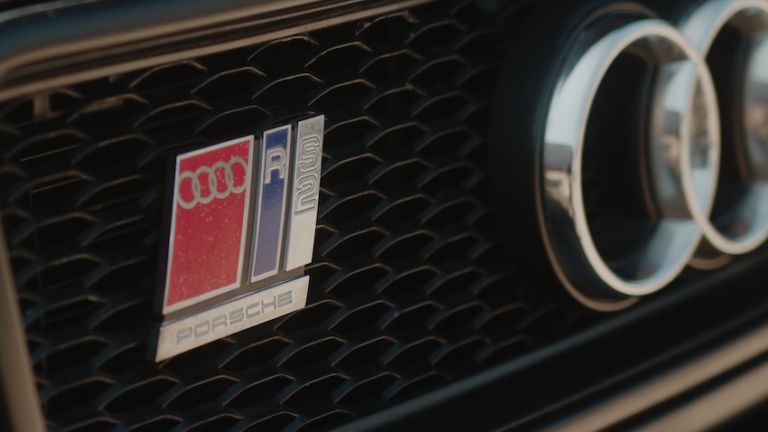
And these aren’t even the most obvious adornments that make the RS2 stand out from the Audi 80, or even the S2. If the huge Porsche-branded Brembo calipers, the alloy wheels from the 968 Clubsport, and those 944 Turbo wing mirrors aren’t enough, it even says Porsche right there on the tailgate, just under the very first version of the Audi RS badge.
But, despite appearances, the RS2 isn’t a simple case of Porsche being able to do a better job. While Audi utilised some undeniably supreme go-faster skills from the Porsche engineering team, that alone doesn’t tell the whole story.
First, the timing was extremely fortunate. In 1994 the Porsche factory had just finished producing the monster V8-powered 500 E for Mercedes-Benz. With the fact they had already collaborated with VAG on the Porsche 924 in the 1970s, and up to 1991 Audi were building the Porsche 944 at their NSU factory in Neckarsulm, Stuttgart’s finest was the obvious choice to help create the RS2.
Second, the engineers at Audi were a little busy with the bread-and-butter (and far more profitable), mass-market cars, developing what would go on to be the ‘A’ series line-up, starting with the Audi A8. Far too busy, it turns out, to be spending serious time and resources on modifying what was essentially the outgoing Audi 80. Even if the board of directors were determined to ensure the world’s fastest estate car would be launched in 1994 and have four rings on the front grille.
Notably – for us dyed-in-the-wool car nerds at least – even the internal designation is a little special. Inside the factory, the RS2 was called the ‘P1’, an almost mythical moniker that would later go mainstream with the Subaru Impreza P1 (1999) and McLaren P1 (2013).
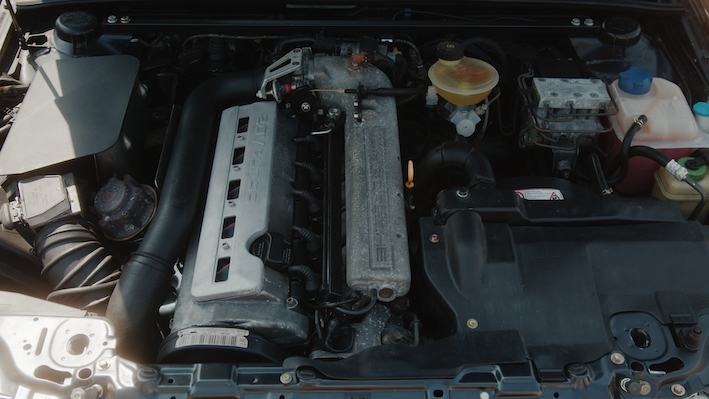
Nevertheless, even with the RS2’s famously heroic turbo lag (immediately followed by a huge surge of boost that put off many a 1990s motoring journalist), the extremely fruity driving characteristics were loved by the public. In fact, what no one at Audi or Porsche was counting on was the sheer popularity of the RS2. The idea of producing a supercar-slaying wagon became a sales hit at a time where fast estates were seen as something of a novelty. The initial plan of producing 2,020 was even boosted with an extra 691 cars before the end of the run.
And with such a significant number built, you’d think it would come at the expense of the kind of rarity value essential for true iconic status. But no. During the entire production run only 184 cars were produced in right-hand-drive (RHD) specification, and these were shared between the UK, Hong Kong and New Zealand. So, while the European RS2 is a rare car right now in 2025, the RHD version is something of an automotive unicorn and a good one will easily cost you more than the original £45,705 price tag.
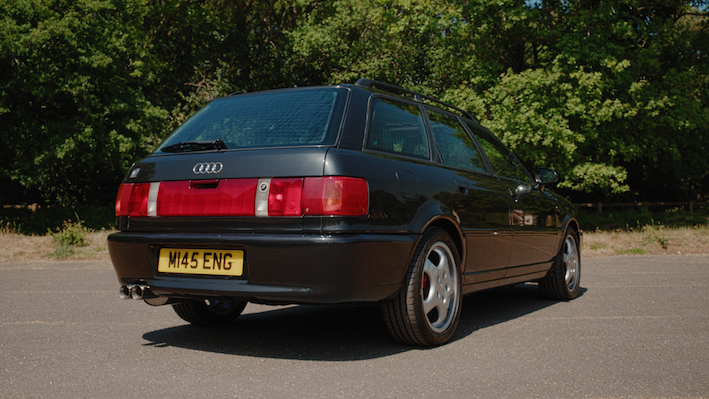
But perhaps the most enduring legacy is the Audi RennSport badge itself. Literally translated as ‘Racing Sport’ the RS nameplate may have been seen on a multitude of high-performance Audis over the last 30 years or so, but it has arguably become most synonymous with the world’s fastest estate cars. So, without Audi and Porsche working together to transform the Audi 80 into the RS2, halo vehicle lines such as the RS4 Avant (2000-present) and RS6 Avant (2002-present) may never have ever existed. Furthermore, all the other automakers wouldn’t have been quite so keen to push their own performance estates further than ever before, either.
The popularity of fast wagons may be at an all-time high nowadays, some may even say they’ve become wholly mainstream. But no matter the brand you choose, all this was kick-started by one iconic estate car, and one simple idea – to make it the fastest. In other words, the modern motoring world owes the Audi RS2 quite the debt of gratitude.

